Normal is New

A pandemic world is something we always watch in movies. Now, we are living in an “enclosed isolated” way of working and minimising human contact. Normal is new and some even called it the “New Normal”.

Photo by Ethan Kwok
Change for the Better Good

Our “normal lives” are a thing of the past now. Looking forward, organisational changes and digital transformation must continue to permeates. If not, many of such “normalities” are proceeding at a snail pace. The “ability” to work from home and necessity to “face time” becomes the old norm of Asia office culture. Digitalisation gets a surprise push from pandemic and the switch to digital front surge in demand.

Extinction

Like all evolution, extinction occurs with each phase. Industries with high touch interaction and cross borders dependencies faces extinction and goes out of business with massive lockdown and borders closure. Many small business are forced to go digital or to close down with the unrealistic cost of rentals and near zero crowds from constant lockdowns. Digitalisation finally emerge the victor from the extinction of pure traditional brick and mortars.

Our kids will be surprise at this part of the history. I can imagine how the “kings” lived in their high walls of castle surrounded by moats for protection. Regardless of how this pandemic turns out, skills resilience is key to survival. Stay Positive!
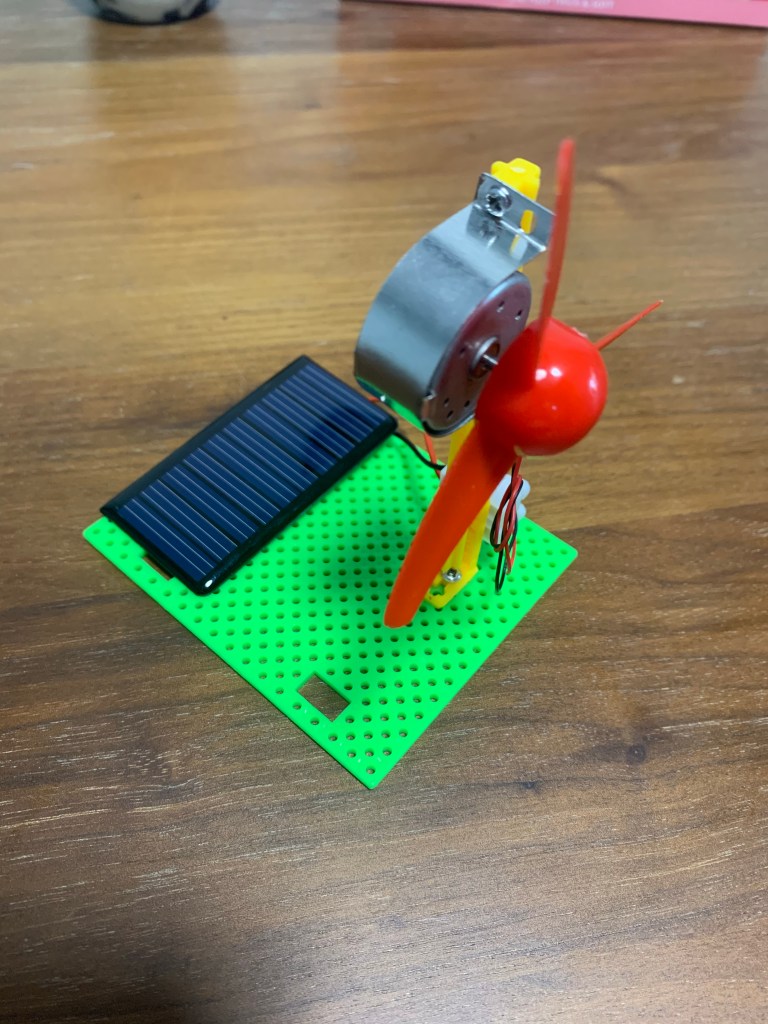
Testing Solar Energy in HDB

Singapore seems to have a whole lot of solar energy that we can tap. This is what we thought so since we get sun all year round. Is it possible to setup solar energy in a HDB flat (Singapore Public Housing) ? Unfortunately, the answer is no. Thus, this is an alternative energy that you cannot utilised in HDB.

Converting Solar Power

You will imagine solar power can power your house and save your electrical bills. After all, most HDB flats are facing the sun in some time of the day. In reality, solar cells have very low efficiency in its conversion to electrical. The best you can do is charge your battery pack after placing in the sun for many hours. You will also need full exposed area for your solar cells.

Storing the Power

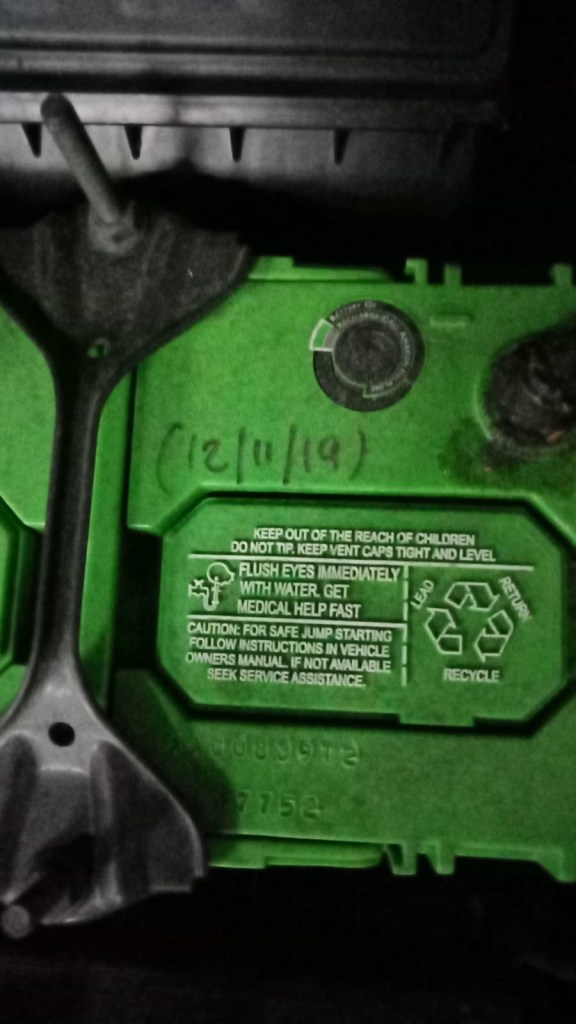
Another issue is the storage of power. This usually require battery packs. If you compute the amount of electrical usage, the time to charge and store a single battery pack. You will end up a lot of batteries around your flat. For HDB, this is not allowed. This is because many solar panels or battery packs will a fire risks.

If you are looking to setup solar power in HDB in Singapore, you are better off buying solar from the energy providers. Of course, this cost much more than conventional energy source. It will be a few years before consumers can utilise solar power as in the movies.

Amazon Affiliate is not Useful

After a period of testing Amazon Affiliate, I realise it is not as useful as I thought. It is only for high volume website and you will be deactivated for zero sales after a period of time. For new startup or website, there is little incentives to get this.

As a reminder, Associate accounts that have not referred three required sales to Amazon.sg within 180 days of sign-up will be automatically rejected.

Amazon.sg
Affiliate Program

Product mix is important as Amazon Affiliate is mainly focus toward physical goods like books. In reality, the theme of the blog plays a part in these affiliate programs. Not all are really suitable. On the whole, there are many fine prints with these programs and they tend to distract you from your overall content.

Not a Must Have

For new website, it is really not worth the time and effort to setup affiliate program. You may be face with a need to turn in a minimum sales like Amazon Affiliate program. Since traffic is usually low, it will take some time to generate much user volume. In addition, these program may even require actual sale of certain product instead pay per click program.

Overall, affiliate program are potential revenue streams. However, it is not suitable for new website or eShop. You are better off to focus in content creation rather than relying your website with affiliate program.

The Project Truth

It is a disappointing day again. Integrity and truth is core value of every team. Unfortunately, someone can hide the truth and even act as if the task is done. The person even go to the extent to pretend to find the non existent task. In the digital world, there are many paper and digital trails or even forensic to discover a lie. Have you met with such a teammate before?

Cannot Deliver

Project delivery and commitment is of high importance to all tasks. This applies to both agile or waterfall model. If one cannot deliver, you must have the guts to admit and think of ways to rectify. Such behaviour are usually cultivate since young. The value of trust and integrity is even more important for Agile project. This is because you cannot afford to micro manage your teammates and keep checking if they can deliver.

Can Trust be Trained?

An important value of a teammate is trust. Many ask if this can be trained. Many schools even have trust or integrity as core values. Sadly, this value is cultivated since young. A habitual liar will continue his behaviour from young to adulthood. You will often encounter teammate who promise to submit their task in school project. Their antics will carry on to the work project.

It is constant battle to train the youngling to have integrity. Kids now prefer to enjoy and take the shortest path to success. However, it is time and proven that hard work, trust and integrity taste the sweetest with a good night sleep.

We Do Have the Capability

Recently, there is an interesting conversation that makes me realise of a deep misconception of technical capabilities within organisations. This leads me to think why organisations choose to outsource with the constant view that “grass is greener on the other side”. On the other hand, I am a firm believer to grow and develop in-house “unrealised” capabilities. This belief will be accelerated by the change in paradigm of digital transformation.

Unrealised Capabilities

There is always a misunderstanding that capabilities must be acquired inorganically for all new technologies. This thought may be true in the old days where knowledge and information are shared via books and paper notes. Now, capabilities are often unrealised and untapped like a oil in deep reserve. Management and human resource (HR) must look beyond current skillset to uncover and develop new ones.

Agile Learning

Another key shift is adoption of Agile to acquired the ability to learn. With Agile learning, you can learn rapidly through practical implementation from your domain knowledge. The investment cost to mine these untapped resources will give you a a much higher returns than acquiring time and materials resources.

The mindset must first be change of management to focus inwards to develop rather than acquisition of “new capabilities”. After all, the best returns of investing in capabilities comes from internal rather than external. Digital transformation goes beyond technology and also involves transformation of you gain new capabilities.

Work On Holiday

Work from home (WFH) is the new norm. However, I realise that Work On Holiday will arise as a direct effect from WFH and Singapore Phase 1.5. The COVID-19 restrictions have blurred the holiday mood. There are little differences of being on holiday and working on holiday. How many of you got bored at home and work on holiday as well?

Photo by Ethan Kwok
Thin Red Line

It is surprising to see a quiet 9pm in Singapore on this holiday. The current situation reminds me of thin red line where boundaries and time blurred one another. Luckily, I will not be exposed to space travel where we will be in similar situation of isolation. You can catch the series The 100 on Netflix to see how it will be.

Pros of Work On Holiday

The good part of working on holiday is less distraction. Usually, there will be no meetings or discussion leaving you time to clear your backlogs. After all, you have nowhere to go as well during the COVID-19 restrictions. Thus, you will end up more productive working on holiday for the COVID-19.

Although you are working on holiday, do time out to take a breather. Soon, we will have no preference over holiday, long weekend or school holidays. After all, the days are similar at home.

Can RPA replace SOP?

SOP (Standard Operating Procedure) is a very old method of steps to guide operations. It is commonly used for industries that requires a lot of standardisation. With digital transformation, it is highly anticipated that RPA (Robotics Process Automation) will replace many of these SOP. Sadly, RPA is far from being a replacement.

RPA automate Poor SOP

An ideal RPA is an automation of SOP without user intervention. RPA does not differentiate between good or poor SOP. If the SOP is flawed, RPA will amplify that error by a large magnitude. This is because humans could be fixing the poor SOP unknowingly. Therefore, you will be faced with the risk of creating a large issue from RPA.

The Real SOP

Documented SOP may not always paint a true picture of the SOP on the ground. Majority of documented SOP are outdated and not relevant. This is very obvious with system where the SOP is disconnected with the system user guide. In this case, operational users evolve documented SOP with system user guide into a “Real SOP”. This SOP is usually only known to operational users. Thus, it is not surprised that RPA is done for the wrong SOP.

For all the hype of RPA, it cannot be a replacement of SOP. Instead, it is more worthwhile to invest in business process re-engineering (BPR) to improve the SOP.

Want All Requirements

Business analysis is a fun field because you get to know all kinds of requirements. One of my favorite is “Want All Requirements”. So, what does this mean? This actually refer to the users who want requirements that can cover all kinds of scenarios in the world. In reality, most of scenarios are not applicable. Thus, the user cannot articulate how the requirements will be.

Photo by Ethan Kwok
Abstract Art

I usually relate such requirements to abstract art. This is because the requirement is subjective to each user point of view. It is so abstract that you cannot really define. It is best to place the requirements in your backlog until you collate enough perspective to interpret with confidence. If you are using waterfall, this is best added to your “parking lot” and taken out of your critical path.

The Sad End

From my past experiences, implementation of these type of requirements always end up unused and unwanted. Majority of these requirements are “nice to have” and strongly insisted by non operational users who may have see such features in other products. Without any linkage to SOP (Standard Operational Procedures) or knowledge of end users, these requirements will meet a very sad ending.

A rule of thumb is to use SOP as a sanity check to ensure requirements are implemented as required. It is a total waste of time, cost and efforts to fulfill “Want All Requirements” knowing it’s sad ending.

Exception Handling with Agile

Exception handling are one of the most difficult requirement because they are often encountered during production monitoring or incident tickets. In “rare” cases, this will be informed during project implementation. Often, such requirements are misleading and contains gaps to actual scenarios. Using Agile, you can easily adapt your system for exception handling.

Why Agile Fit Exception Handling

Agile strength is its ability to adapt to changes quickly. Exception scenarios belong to this category as users are not able to anticipate this process. Often, the exception are handled beyond the usual SOP (Standard Operating Procedures). Other exceptions may be caused by unusual incidents like natural disasters, accidents or event pandemic like COVID-19 in the real world.

Use Exception Handling with Agile

Like all organisations, waterfall approach remained the de facto financial and procurement guideline for project budgeting and charging. You may instead adopt Agile for exception handling scenarios. Utilising Agile will help you manage the uncertainty and react to this constant change. For some cases, exceptions become part of SOP like COVID-19 where it have lasted for more than a year.

Transportation Rates Model

Transportation rate model is becoming an automation for many TMS (Transportation Management System). However, rate model is not commonly adopted in Asia countries. One reason is the different transportation rating methods in each Asia countries. This leads to many customisation.

Common Transport Rate Model

These are some of the most common rate models you can design for your TMS.

  • City to City
  • Zip to Zip
  • Distance
  • Volumetric, weight or volume
  • Duration e.g daily, monthly
  • Equipment e.g. truck, chassis
Why Rating Model

Rating model goes beyond system design. Sadly, many rates by sales team are done in isolation with consideration to TMS. Using rating model have many advantages like cost reduction from operational efficiency, automated computation and financial settlement. This model are proven is eCommerce and eLogistics companies who are pure play digital.

Many traditional logistics providers remains entrenched in paper rates while their digital counterparts enter the logistics with rates digitalisation. The digital transformation of rate model remains a constant challenges for many. A major reason is due to user resistance to digitalise and mindset to change. Do realise that rates is no longer an IT or sales task but a collaborative efforts.